
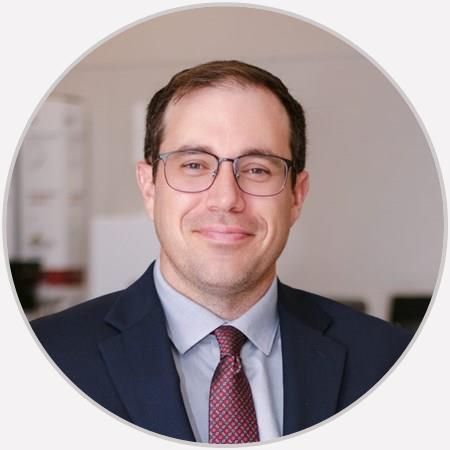
Dr. Jack Leschke, MD
Practice: Leschke Spine and Neurosurgery
Specialty: Neurosurgery, Neurology
Office locations: Appleton, WI
00 out of 5
0 Ratings
0 Comments
Dr. Jack Leschke, M.D., is a dual board-certified neurologist and neurosurgeon who sees patients at our Appleton office. He founded Leschke Spine and Neurosurgery as an independent practice in 2026. Uniquely trained in both neurology (Medical College of Wisconsin) and neurosurgery (University of Minnesota), he specializes in comprehensive spine and brain surgery, cranial procedures, neurotrauma, and advanced neurological diagnostic evaluations.
There are no reviews yet. Please check back in a day or two.
Appleton
1611 S Madison St.
Suite 110
Appleton, WI 54915
Suite 110
Appleton, WI 54915
Dr. Jack Leschke, M.D., did not arrive at medicine through a single moment of inspiration. Medicine was simply part of his life from an early age. His father is a physician. His grandfather was a physician. His brothers are physicians. But more important than the profession itself was the example that came with it: a commitment to service and doing the right thing for the people who trust you with their care, a standard his grandfather articulated simply: the best doctors are the ones who get up in the middle of the night to help people.
Dr. Leschke completed his medical education at the Medical College of Wisconsin, where he also trained as a neurologist and developed the foundational clinical skills that inform every evaluation he conducts today. He then pursued neurosurgery residency at the University of Minnesota, where he trained across the full scope of neurological surgery, including spine, brain, trauma, and cranial procedures. That sequence, neurology first and neurosurgery second, is uncommon. It means that before Dr. Leschke considers any surgical option, he evaluates the nervous system the way a neurologist does: through a careful history, a thorough neurological examination, and imaging reviewed in that context.
Dr. Leschke grew up in Oshkosh. He has practiced across Northeast Wisconsin and chose to build his independent practice here because this is home. He cares for patients in his hometown and remains deeply connected to the community he serves. That sense of responsibility shapes every decision he makes about their care.
Dr. Leschke approaches spine and brain care first as a neurologist, listening closely, performing a detailed neurological examination, and identifying where within the nervous system a patient’s symptoms originate. His residency in neurology trained him to localize a problem before imaging confirms it, to distinguish between conditions that may look similar on a scan but behave differently in a patient, and to recognize neurological diseases that can mimic problems of the spine. He carried that foundation into his neurosurgical training and ultimately into the operating room, where imaging remains essential but is always interpreted in the context of a patient’s history, symptoms, and neurological function. The goal is not simply to identify an abnormality on an MRI, but to determine whether that abnormality actually explains what the patient is experiencing. For patients with complex or persistent neurological symptoms, that distinction can be meaningful. Board certification in both neurology and neurological surgery is uncommon among neurosurgeons, and that combined training shapes how Dr. Leschke evaluates each patient and approaches the decision of whether, and how, to intervene.
In May 2026, Dr. Leschke founded Leschke Spine and Neurosurgery as an independent practice in Fox Valley, Wisconsin. Independence means that every clinical decision is made by the same physician who sees the patient, evaluates the imaging, and, if surgery is indicated, performs the procedure and follows up through recovery.